Reading Deer Trails to Find Water in Hardwood Forests
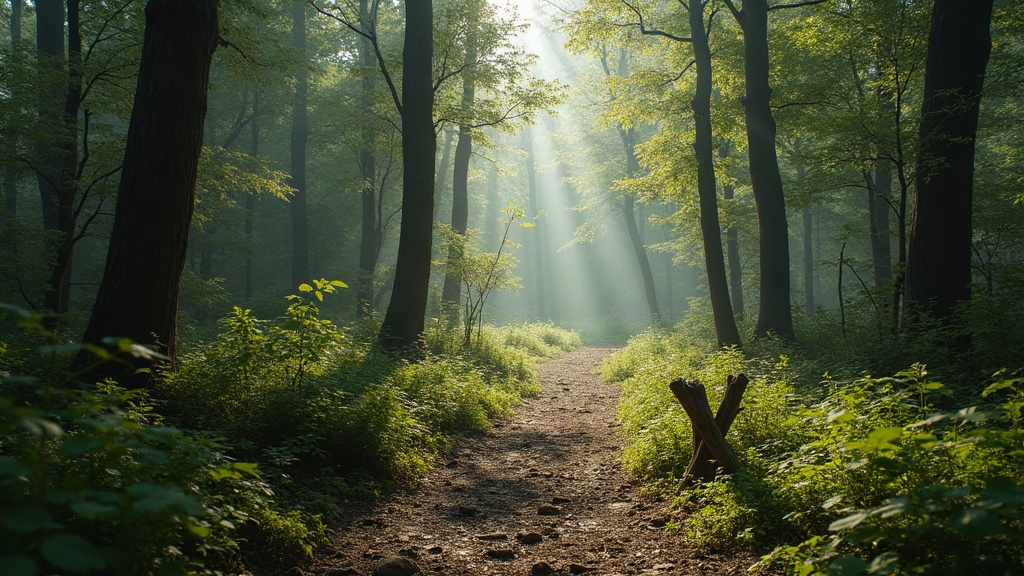
If you’re lost or low on water in a hardwood forest, one of the fastest ways to find a reliable source is to read deer trails. Deer are creatures of habit. They move daily between bedding areas, feeding grounds, and water, and their trail networks almost always funnel toward streams, springs, or seeps. Learn to recognize and follow these trails correctly, and you can save yourself hours of aimless bushwhacking.
Why Deer Trails Lead to Water
Whitetail and mule deer need to drink at least once or twice a day, more often when it’s hot. Over generations, herds wear in consistent paths connecting their core living areas to dependable water sources. In mature hardwood forests (oak, hickory, maple, beech), these trails tend to be more defined than in open country, simply because deer stick to the easiest terrain between trees, downed logs, and brush.
Unlike human trails, deer paths tend to:
- Follow the path of least resistance along contour lines rather than straight up or down a slope
- Converge from multiple directions as they near water
- Show increasing use (more tracks, more droppings, more rubbed bark) the closer you get to a source
How to Identify a True Deer Trail
Not every faint path in the leaf litter is a deer trail. Before you commit to following one, check for these signs.
Physical Trail Features
- A trail 8 to 14 inches wide, slightly depressed into soil or matted leaves
- Hoof prints (two-toed, heart-shaped) pressed into soft ground, especially near creek banks
- Trails that duck under low branches at deer height, roughly knee to chest height for a person
Supporting Sign Along the Route
- Fresh droppings (pellet groups, shiny and dark if recent)
- Rub marks on saplings from bucks scraping antlers
- Browsed twigs and stripped bark on young trees
- Beds (oval flattened patches of leaves where deer have rested nearby)
If several of these signs cluster together on one trail, you’re likely on an active route, not some old or incidental one.
Which Direction Leads to Water?
Once you’ve confirmed an active trail, the next challenge is figuring out which way to go. A few reliable clues:
- Follow the downhill grade. Water collects low, so trails trending consistently downward, even gently, are good candidates.
- Watch for trail convergence. Where two or more trails merge into one wider, more heavily used path, you’re moving toward a high-traffic resource, usually water.
- Look for moisture-loving vegetation. Ferns, jewelweed, sedges, and moss-covered rocks appearing creek-side mean you’re close.
- Listen and smell. In a quiet hardwood forest, running water is audible well before it’s visible. Damp, earthy air also thickens up near streams and springs.
Time of Day Matters
Deer typically move to water in the early morning and just before dusk. If you’re trying to confirm a trail is still active, check for fresh tracks or disturbed leaves during these windows. Overnight dew or morning frost makes recent prints stand out sharply against older ones, so timing your check can make a real difference.
What to Do Once You Find Water
Finding the source is only half the job.
- Confirm it’s a renewable source. Flowing streams or active springs are safer bets than stagnant pools, which can sit for weeks collecting runoff and worse.
- Purify before drinking. Boil for one minute, or use a filter rated for bacteria and protozoa, plus purification tablets or UV treatment to handle viruses.
- Mark the route back. Tie flagging tape or notch bark so you can return without having to re-track the deer path from scratch.
Common Mistakes to Avoid
- Following a trail uphill on the assumption it must lead somewhere. Deer also travel to bedding and feeding areas that have nothing to do with water.
- Mistaking a game trail for a human-made path and losing the thread the moment it splits.
- Ignoring faint spur trails that peel off toward smaller seeps. Sometimes those are closer than the main creek, and easier to miss.
Conclusion
Deer trails are one of nature’s best-kept maps to water in hardwood forests. Learn to spot genuine, active trails, read the supporting sign (tracks, rubs, beds), and follow the terrain’s natural downhill pull, and you’ll be able to use these paths to find fresh water efficiently. It’s a skill worth having whether you’re bushcrafting, hunting, or just navigating backcountry woods with a bit more confidence.