Why Your Campfire Smokes You Out Every Time (Fixed)
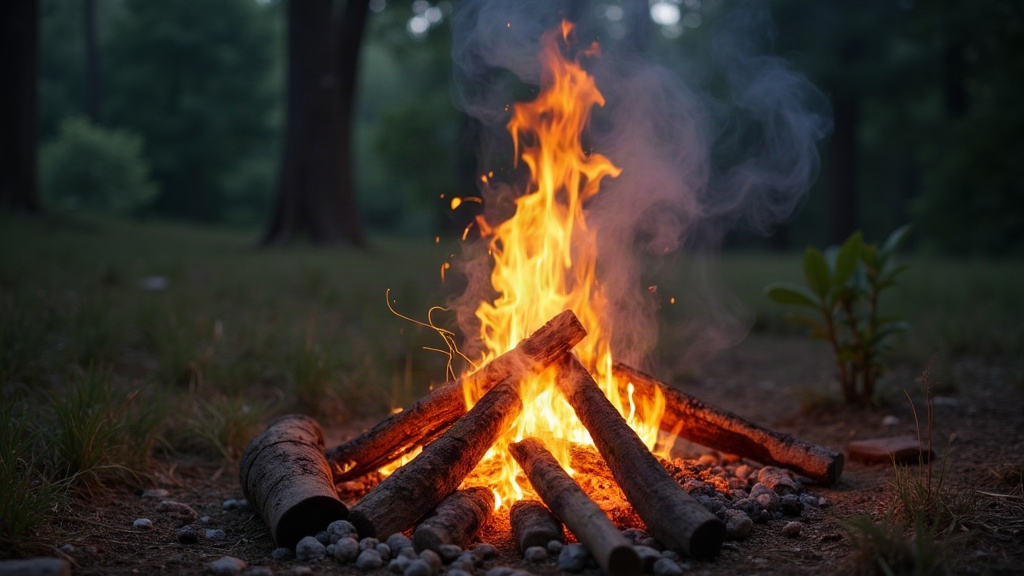
Why Does Campfire Smoke Always Seem to Find You?
If smoke seems to follow you around the fire no matter where you sit, the culprit is almost always one of three things: wet wood, a poorly built fire, or wind doing what wind does. The good news? All three are fixable, often with nothing more than a few small adjustments to how you stack, feed, and position your fire.
Why Smoke “Chases” You
Smoke isn’t actually chasing you. It’s physics, not malice. A person sitting beside a fire creates a low-pressure pocket, your body blocks the airflow and leaves cooler, lower-pressure air right behind you. Smoke rises with the hot air and gets pulled straight into that gap. This is exactly why switching seats rarely helps for long. Give it ten minutes and the smoke finds you again, like it has your scent.
The Real Causes of Excess Smoke
1. Wet or Green Wood
This is culprit number one, hands down. Thick, white, eye-stinging smoke almost always means the wood you’re burning still has water in it. Instead of burning cleanly, that trapped moisture turns to steam mid-combustion, and it drags unburned particles up with it, which is what you’re actually smelling and squinting at.
Fix:
- Use wood seasoned (properly dried) for at least 6 to 12 months. Rushing this step is the single biggest mistake people make.
- Store firewood off the ground, covered, especially the night before a camping trip. Nothing ruins a fire faster than a surprise rain shower the week before.
- Do the snap test: grab a piece and bend it. Dry wood cracks with a sharp snap. Wet wood just bends, or feels soft and spongy in your hands.
- Stuck with damp wood anyway? Split it into smaller pieces and build a hot base first using dry tinder and kindling. A hotter starting fire helps the damp wood burn more completely instead of just smoldering.
2. Poor Airflow in the Fire Structure
Fire needs oxygen the same way an engine needs air. Stack your logs too tight, or pile them into a dense mound, and the fire smolders rather than flames. More smoke, less heat. Not a good trade.
Fix:
- Build a teepee or log cabin structure, both leave gaps for air to move through the stack.
- Elevate the base slightly with a layer of dry sticks underneath so air can reach the fire from below, not just from the sides.
- Don’t dump a pile of wood on at once. Feed it gradually. Smothering a fire with fuel is one of the fastest ways to kill the flame and double the smoke.
3. Wind Direction and Pit Placement
Wind doesn’t just push smoke sideways in a straight line. It swirls, bouncing off rocks, logs, coolers, even the people sitting around the fire, creating little eddies that carry smoke in directions you wouldn’t expect. That’s part of why smoke seems to find every seat eventually, not just the “downwind” one.
Fix:
- Check wind direction before you even set up chairs. Position the fire so the prevailing wind carries smoke away from where people are sitting, not through the middle of the group.
- Set up a windbreak upwind (a row of rocks, a log, even your car) to cut down on turbulence.
- In a full circle around the fire, accept reality: no single seat stays smoke-free all night. Rotating spots every so often works better than fighting the wind, which you will lose.
Fire-Building Techniques That Reduce Smoke
- Top-down fire method: Large logs on the bottom, kindling in the middle, tinder on top. It burns downward slowly and produces noticeably less smoke than the standard bottom-up build most people default to.
- Batoning for dry cores: Use a knife and a baton to split larger logs open, exposing the drier wood inside. This is a lifesaver after a rainy stretch when everything on the outside is damp.
- Skip pine if smoke is your enemy: Pine lights fast, sure, but it’s resinous and tends to throw off more smoke and soot than hardwoods like oak, maple, or birch. Great for quick kindling, not great for the main burn.
- Small and hot beats big and smothered: A compact, well-oxygenated fire burns far cleaner than a towering pile of half-burning logs that looks impressive but chokes on itself.
Quick Troubleshooting Checklist
- Is the wood actually dry? Snap-test a piece before you commit.
- Is there enough airflow in the stack, or is it packed too tight? Loosen it.
- Is the wind pushing smoke straight into your seating area? Reposition, or block it.
- Is the fire smoldering rather than flaming? Add dry kindling and open up the structure.
Conclusion
A smoky campfire isn’t bad luck, it’s almost always wet wood, blocked airflow, or wind working against you. Season your wood properly, build a structure that actually lets oxygen in, and think about wind direction before you strike the first match. Get those three things right, and you’ll spend the evening enjoying the fire instead of circling it with watery eyes, chasing a smoke-free seat that doesn’t exist.