How to Leach Tannins from Acorns in a Cold Creek for Flour
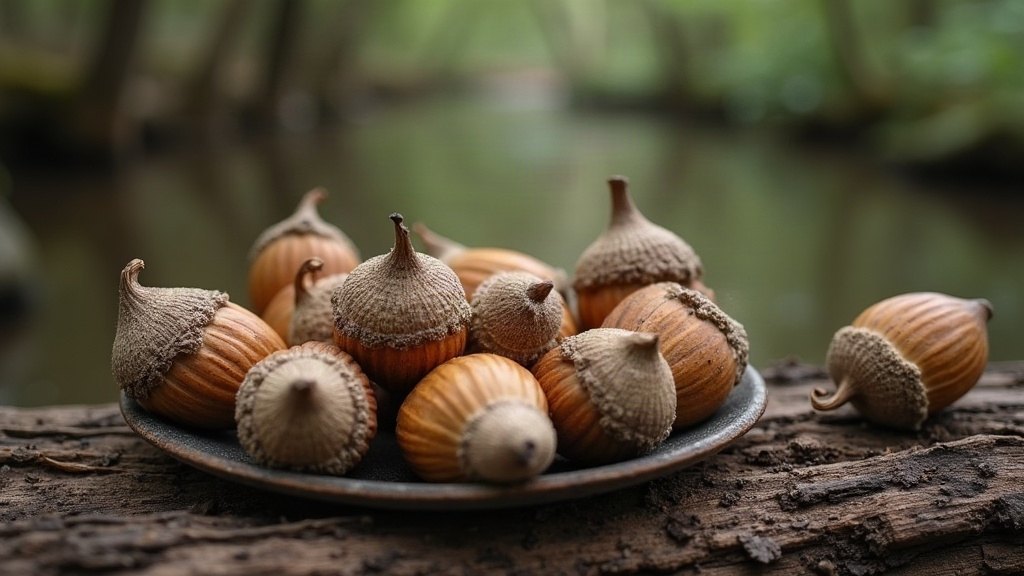
Leaching Acorns in a Cold Creek: A Step-by-Step Guide to Making Your Own Acorn Flour
Acorns might be the most ignored food source growing right over our heads. Every autumn, oak trees across North America and Europe drop thousands of pounds of them, and almost nobody touches them. Why? Raw acorns are packed with tannins, the same bitter compounds that make unripe persimmons pucker your mouth, and eating them straight off the ground will leave your stomach unhappy. But there’s an old fix for this problem that doesn’t require a stove, a thermometer, or much effort at all: a cold creek. With a mesh bag, some moving water, and a bit of patience, you can turn that bitter nut into a sweet, nutty flour that’s genuinely good for baking. Here’s the full process, from cracking shells to grinding flour.
Why Use Cold Creek Leaching Instead of Boiling?
Most modern foraging guides push hot water leaching because, frankly, it’s quicker. But cold water leaching, especially when you let a running creek do the work, has some real advantages that boiling just can’t match.
- Better flavor and texture: Cold leaching keeps more of the acorn’s natural starches intact, so the flour comes out smoother and less gritty than the stuff you get from boiling.
- No constant attention needed: Toss the bag in the creek and walk away. You’re not standing over a pot for hours, and you won’t ruin a batch by forgetting it on the stove.
- More traditional: Indigenous communities in California, Korea, and parts of Europe have leached acorns this way for centuries. In Korea, acorn flour (dotorimuk) is still a kitchen staple, not some novelty survival food.
- Preserves nutrients: Repeated boiling strips out fat and protein along with the tannins. Slow cold leaching is gentler, so you keep more of what made the acorn worth eating in the first place.
The catch? Time. Depending on water temperature, how fast the creek is flowing, and which oak species you’re working with, cold leaching can take anywhere from 3 days to 2 weeks. If you’re impatient, this isn’t your method. If you’ve got a creek nearby and no deadline, it’s hard to beat.
Step 1: Gather and Sort Your Acorns
Collect in fall, right after the acorns drop. Fresher is better; acorns that have sat on the ground for weeks start to mold or get claimed by weevils.
- White oak acorns (round caps, rounded tips) are naturally lower in tannins and leach noticeably faster, sometimes in half the time of red oak.
- Red oak acorns (pointed tips, sharply bitter) work too, but only if you’re willing to wait longer.
Run a float test before you do anything else: drop the acorns in a bucket of water. Anything that floats is probably wormy or hollow inside, so toss it. Keep what sinks.
Step 2: Shell and Crack the Acorns
You’ve got two options here: leach them whole in the shell, or shell and crush them first. Go with the second. Shelled, coarsely ground acorns leach dramatically faster since more surface area is actually touching the water.
- Crack the shells with a nutcracker, a hammer, or really anything heavy enough to do the job.
- Peel off the shell and that thin brown inner skin (the pellicle) as thoroughly as you can.
- Chop or crush the nutmeat into pieces roughly the size of a pea, or pulse them in a food mill or blender with a splash of water to make a rough meal.
Step 3: Build Your Creek Leaching Setup
Find a clean, cold, fast-moving creek. Stagnant water is a dead end here; it just sits there soaking in the tannins instead of carrying them away.
- Load your crushed acorn meal into a fine-mesh bag. A pillowcase, a nut-milk bag, even several layers of cheesecloth tied off will do.
- Tie the bag shut and weigh it down with a clean rock so it doesn’t float downstream.
- Anchor it somewhere with steady current, fully submerged but not buried in silt or mud.
- Tie the anchor rope to a tree root or a stake driven into the bank. You do not want to come back and find your acorns halfway to the ocean.
Step 4: Let the Current Do the Work
Leave the bag in place and check on it every 1 to 2 days.
- Pinch out a tiny bit of meal each time and taste it. Tannins taste sharp and astringent, almost like oversteeped black tea.
- White oak acorns often finish in 3 to 5 days. Red oak can drag on for 7 to 14.
- Debris and silt will collect on the mesh over time; rinse it off but keep the bag underwater the whole time.
You’ll know it’s done when the bitterness is gone entirely and the meal tastes mild, a little sweet, and nutty rather than harsh.
Step 5: Dry and Grind into Flour
Once the leaching is finished:
- Pull the bag out and squeeze out as much water as you can.
- Spread the meal in a thin layer on a clean cloth or a drying rack, either in direct sun or in a low oven (around 150°F / 65°C), or in a dehydrator if you have one.
- Once it’s fully dry and crumbly, grind it down in a food processor, a coffee grinder, or just a mortar and pestle until it’s fine flour.
- Keep it in an airtight container in the fridge or freezer. Acorn flour has natural oils in it and will turn rancid fast if left at room temperature.
How to Use Acorn Flour
Acorn flour isn’t usually a 1-to-1 substitute. Mixed at 25-50% with regular wheat or all-purpose flour, it works nicely in:
- Pancakes and flatbreads
- Muffins and quick breads
- Thickening stews, the same way it’s used traditionally in Korean dotorimuk jelly and in Native Californian acorn mush
Common Mistakes to Avoid
- Leaching whole, uncracked acorns: this slows everything down to a crawl, sometimes doubling or tripling your wait time.
- Using stagnant or warm water: without constant water movement exchanging the tannins out, the process just stalls.
- Skipping the taste test: always confirm the bitterness is gone before you dry the meal. Once it’s dried, it’s much harder to tell if any tannin is left.
Conclusion
Leaching acorns in a cold creek is slow, sure, but it’s about as low-effort as wild food processing gets, and the payoff is real: a free, abundant resource turned into flour that actually tastes good. All you need is a mesh bag, a clean stretch of running water, and the patience to wait a few days. Do it once and you’re tapping into one of the oldest food traditions humans have ever practiced.