Field Dressing and Cooking Brook Trout Over a Twig Fire
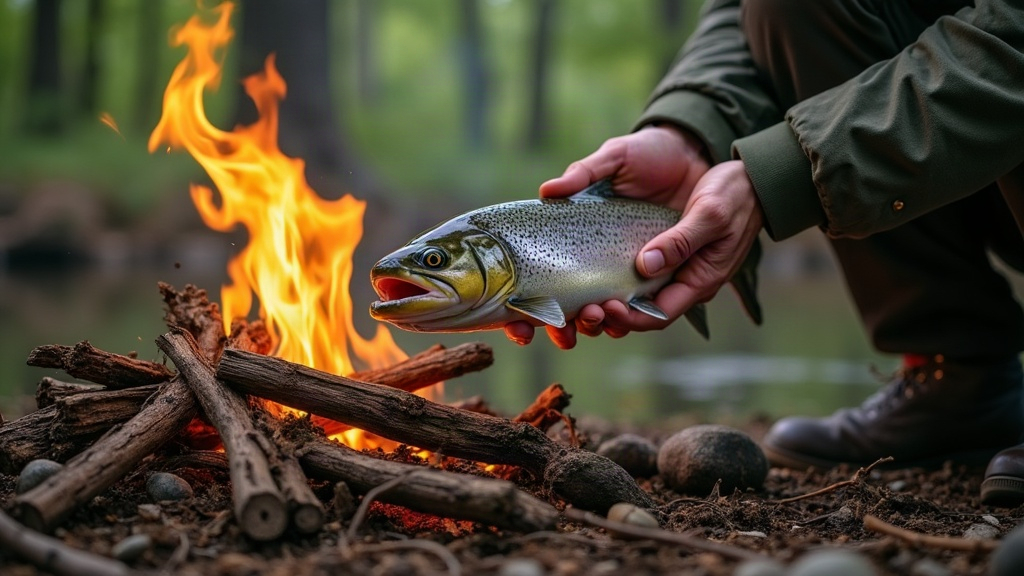
There’s nothing quite like eating a brook trout you caught an hour earlier, cooked over a small twig fire with nothing but a knife, a stick, and a pinch of salt. This guide walks you through field dressing a brook trout quickly and safely, building an efficient twig fire for cooking, and getting that fish from stream to plate with almost no gear and a lot of flavor.
Why Field Dress Immediately
Brook trout spoil fast, especially in warm weather. The gut cavity holds bacteria and digestive enzymes that start breaking down the flesh within an hour of death. Dress the fish streamside, right after you catch it, and the meat stays firm. Wait too long, even in a cooler bag, and you’ll notice an off-flavor creeping in by the time you get to camp.
Rule of thumb: if you’re keeping a trout, dress it within 15 to 20 minutes of the catch, ideally right at the water’s edge where you can rinse it immediately.
Field Dressing a Brook Trout Step by Step
You only need a sharp, short-bladed knife. A 2.5 to 3 inch fixed blade or a decent pocketknife does the job fine, no need for anything fancier.
- Stun and dispatch humanely. A quick, firm tap behind the head, or bending the head back sharply, ends things fast and cleanly.
- Make the vent cut. Insert the knife tip into the vent (anus) and run it up toward the gills, cutting just through the belly skin. Don’t drive the blade deep, or you’ll puncture the intestines and taint the meat.
- Remove the guts. Pull the entrails out with your fingers or the knife tip. Brook trout guts usually come out in one clean motion, almost like unzipping a pocket.
- Scrape the blood line. Run your thumbnail or the spine of the knife along the dark line pressed against the backbone inside the cavity. That’s kidney blood, and if you leave it, it carries a bitter, muddy taste into the finished meal.
- Cut the gills (optional but recommended). Removing them prevents a bitter edge and helps the fish cool faster, which matters more than people think on a warm afternoon.
- Rinse thoroughly in clean, cold stream water. Pat the cavity dry with grass, a bandana, or paper towel if you happen to have some.
Leave the head on if you’re cooking the fish whole over fire. It holds the flesh together and doubles as a built-in handle when you’re turning the stick.
Building an Efficient Twig Fire
A twig fire, sometimes called a “hobo fire” or a Dakota-style mini fire, is ideal for cooking a single trout. It burns hot and fast and doesn’t need a big bed of coals to get the job done.
- Gather pencil-to-thumb-thickness dry twigs. Dead, standing wood snaps cleanly and burns far cleaner than anything pulled off the ground.
- Build a small teepee or log-cabin stack, about 12 to 18 inches tall. Small fires are easier to manage and burn through a lot less fuel than people expect.
- Use a fire-starter, birch bark, fatwood shavings, or a cotton ball smeared with petroleum jelly, to get flame going fast.
- Feed it steadily with finger-thick sticks until you’ve got a bed of glowing coals roughly the size of a dinner plate. That coal bed is your real cooking heat, not the open flame licking above it.
Cooking over open flame chars the skin while the inside stays raw, a frustrating combo. Cooking over coals gives you even, controlled heat instead.
Cooking the Trout Over the Fire
Method 1: Stick-Roasted Whole Trout
- Skewer the trout lengthwise on a green (freshly cut, non-resinous) stick, running it through the mouth and out near the tail.
- Prop the stick at an angle over the coals, about 8 to 10 inches above the heat.
- Rotate it every 2 to 3 minutes. A 10 to 12 inch brook trout usually cooks through in 12 to 15 minutes total.
- You’ll know it’s done when the flesh flakes easily and shifts from translucent to an opaque pink-white, and the skin pulls away cleanly from the backbone.
Method 2: Foil or Leaf-Wrapped Coal Cooking
- Season the cavity with salt, and wild herbs if you can find any (wild onion, mint, or even pine needles add a surprising amount of flavor).
- Wrap it tightly in foil, or in large wet leaves (sycamore or burdock work well) tied off with cordage if foil isn’t an option.
- Nestle the packet directly into the glowing coals, not the open flame.
- Cook 8 to 10 minutes per side, flipping once.
Seasoning on the Trail
Minimalist seasoning works best here. Fresh trout has a delicate flavor, and a pinch of salt, a squeeze of foraged wild garlic, or a sprig of streamside mint tucked inside the cavity is usually all it needs. Don’t overdo it.
Common Mistakes to Avoid
- Cooking over flame instead of coals. This burns the skin before the inside ever cooks through.
- Overcooking. Trout dries out fast, so pull it the second it flakes.
- Skipping the blood line scrape. Leave it in and you’ll get a bitter, muddy aftertaste that ruins an otherwise great meal.
- Using resinous wood (pine, spruce) for skewers. It leaves a turpentine taste in the meat. Stick with willow, maple, or birch instead.
Conclusion
Field dressing and cooking a brook trout over a twig fire is one of the most satisfying skills a backcountry angler can pick up. It takes almost no gear, uses wood you can gather in minutes, and rewards you with a meal that genuinely tastes like the place you caught it. Get the vent cut right, scrape that blood line, build your fire in stages, and cook over coals instead of flame, and any stream-side catch turns into a solid trailside meal.