How to Splice a Snapped Paracord Tent Guy Line That Holds
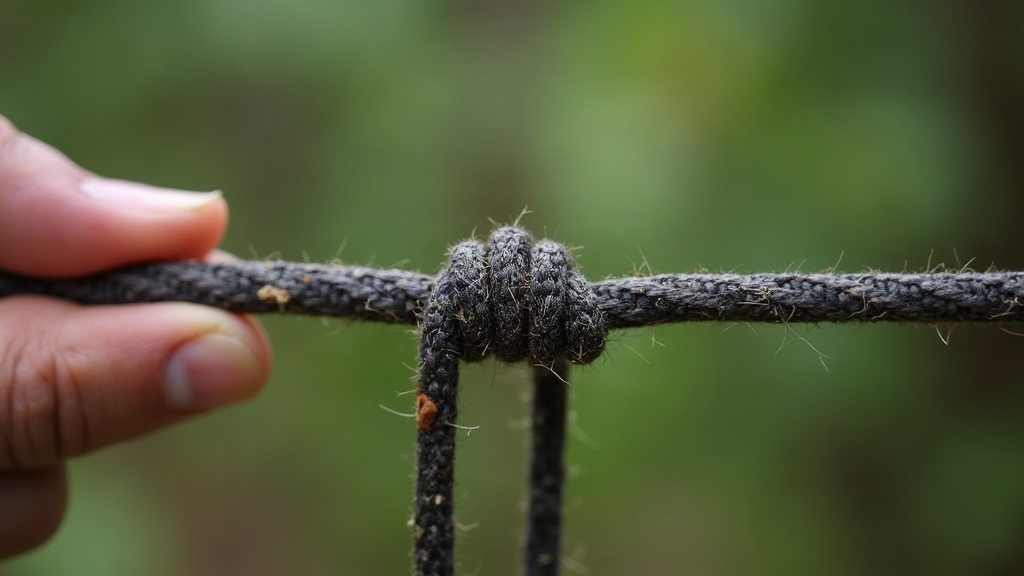
A snapped guy line at 2 a.m. in a gale ranks among the worst sounds you’ll hear in a tent. Your rainfly starts slapping, the pole flexes, and suddenly you’re fumbling with a headlamp trying to figure out what just happened. Here’s the good news: paracord splices well, and a proper core-lock splice restores most of its original strength, far more than you’d get from a plain overhand knot, which can shave off 40-50% of the cord’s rated tensile strength. Below is how to do it right so your tent doesn’t flap loose in the next gust.
Why a Knot Alone Isn’t Enough
Sure, tying the two broken ends together with a square knot or a double fisherman’s is quick. But knots create sharp bends, and sharp bends concentrate stress right at the pinch point. Under sustained wind load (repeated gusting, not just one steady pull), knots also tend to work themselves loose over the course of a night as the cord flexes back and forth. A splice does the opposite: it buries the load inside the cord’s own sheath and spreads tension across several inches instead of squeezing it into one spot.
What You’ll Need
- The two broken ends of your paracord (550 paracord works best; thinner cord splices less reliably)
- A lighter or small torch
- A thin dental floss loop, or a paracord “fid” / bent wire loop for pulling strands through the sheath
- A sharp knife or scissors
- Optional: a small dab of super glue for extra insurance at anchor points that catch the worst of the wind
Step-by-Step: The Core-Lock Splice
1. Trim and Seal Both Ends
Cut each broken end square. Melt the tip briefly with a lighter, then press it into a rounded cap with your fingers (go easy, it’s hot). This keeps things from fraying while you work and stops the inner strands from sliding around on you.
2. Strip the Inner Strands from One End
Pick one of the two ends and cut back about 2-3 inches of the outer sheath, then pull out the inner strands entirely so you’re left with just a hollow tube. That hollow tube is your “sleeve,” the part that will swallow the other end.
3. Feed the Opposite End Into the Sleeve
Take the second cord, the one that still has its core intact, and feed it into that hollow sheath tube. A fid makes this easy; if you don’t have one, thread a floss loop through with a needle and pull the cord along with it. Push it in until you’ve got roughly 3 inches of overlap between the two pieces.
4. Melt-Lock the Buried Tip
Before seating it fully, melt the very tip of the inserted end just enough to form a small bulb. Think of this bulb as an anchor: once it’s inside the sheath, it can’t pull back out through the narrower open weave.
5. Compress and Smooth the Overlap
Work the sheath fibers back down over the overlap, smoothing out any bunching until the splice matches roughly the same diameter as the rest of the line. Done right, you’ll barely notice the splice from a few feet away.
6. Whip-Wrap the Splice Point
If you’re dealing with real wind load, say, guy lines on a tarp shelter out on exposed ridgeline, wrap a few tight turns of thin cord or dental floss around the splice junction and tuck the ends underneath. This keeps the sheath from shifting and doubles as a visual marker so you can check on it later.
7. Test Before You Trust It
Anchor one end to a solid post, pull hard by hand, then give it a few sharp jerks to mimic a gust hitting the line. A good splice holds firm, no slipping, no stretching at the seam. Feel any give at all? Redo the melt-lock with a bigger bulb.
Field Alternative: The Double Fisherman’s Backup
Mid-storm, with wind howling and no time for a proper splice, just tie a double fisherman’s knot as a stopgap. Re-splice it properly once things calm down. It won’t hold up as well long-term, but it’ll get you through the night without an outright failure.
Preventing the Next Break
- Check guy lines at UV-exposed anchor points every trip. Sunlight breaks down paracord’s nylon sheath faster than abrasion ever will.
- Skip sharp 90-degree bends around stakes when tying off; a loop or toggle spreads the load better.
- Pack 15-20 extra feet of paracord set aside strictly for repairs, not for clothesline duty or hanging a bear bag.
Conclusion
A snapped guy line doesn’t have to end your trip early. Sleeve, insert, melt-lock, whip-wrap: that’s the whole core-lock splice, and it restores most of the cord’s original strength while resisting the loosening that plagues knots under repeated gusts. Do yourself a favor and practice it once at home, on a spare piece of cord, before you’re stuck doing it by headlamp in a storm.